



Description
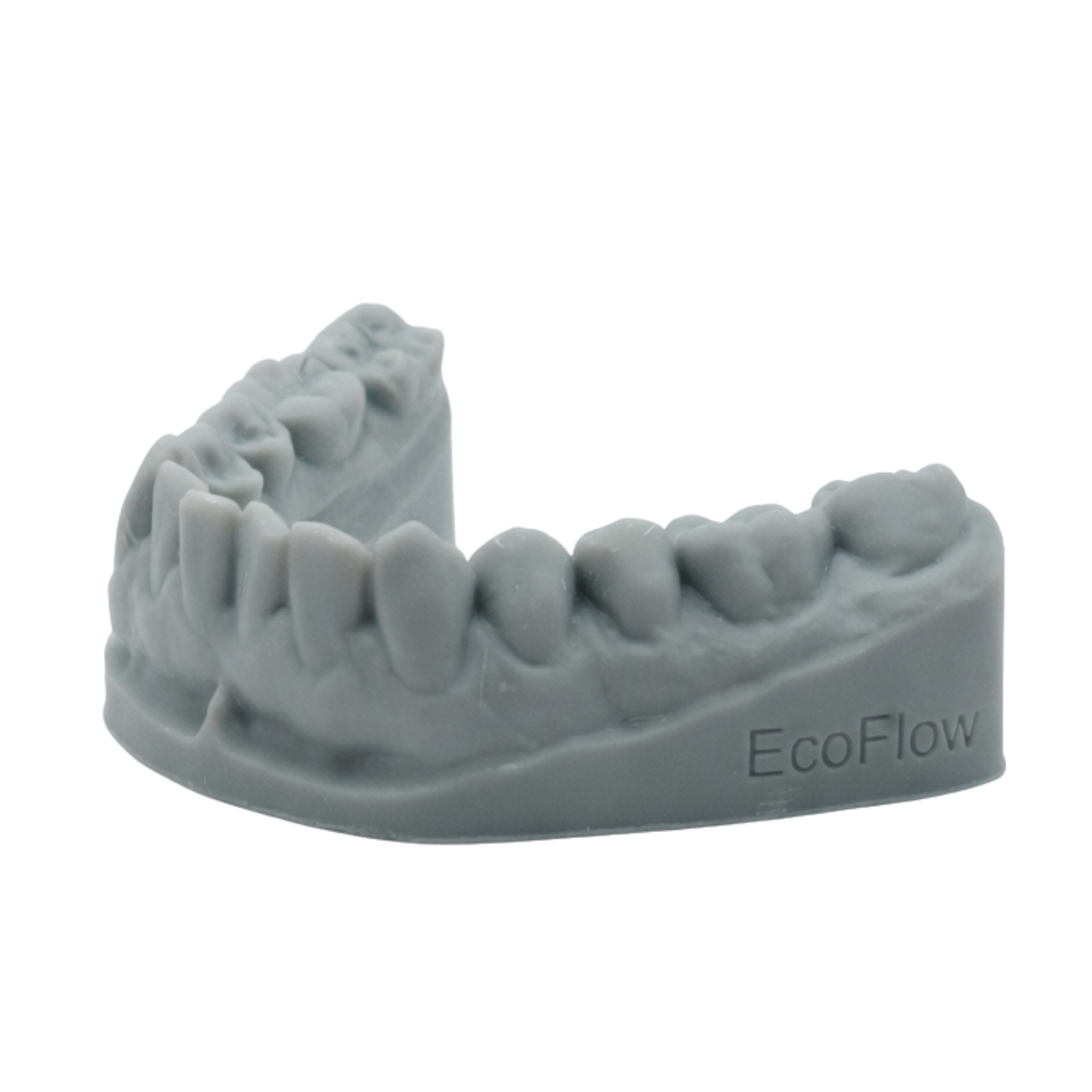
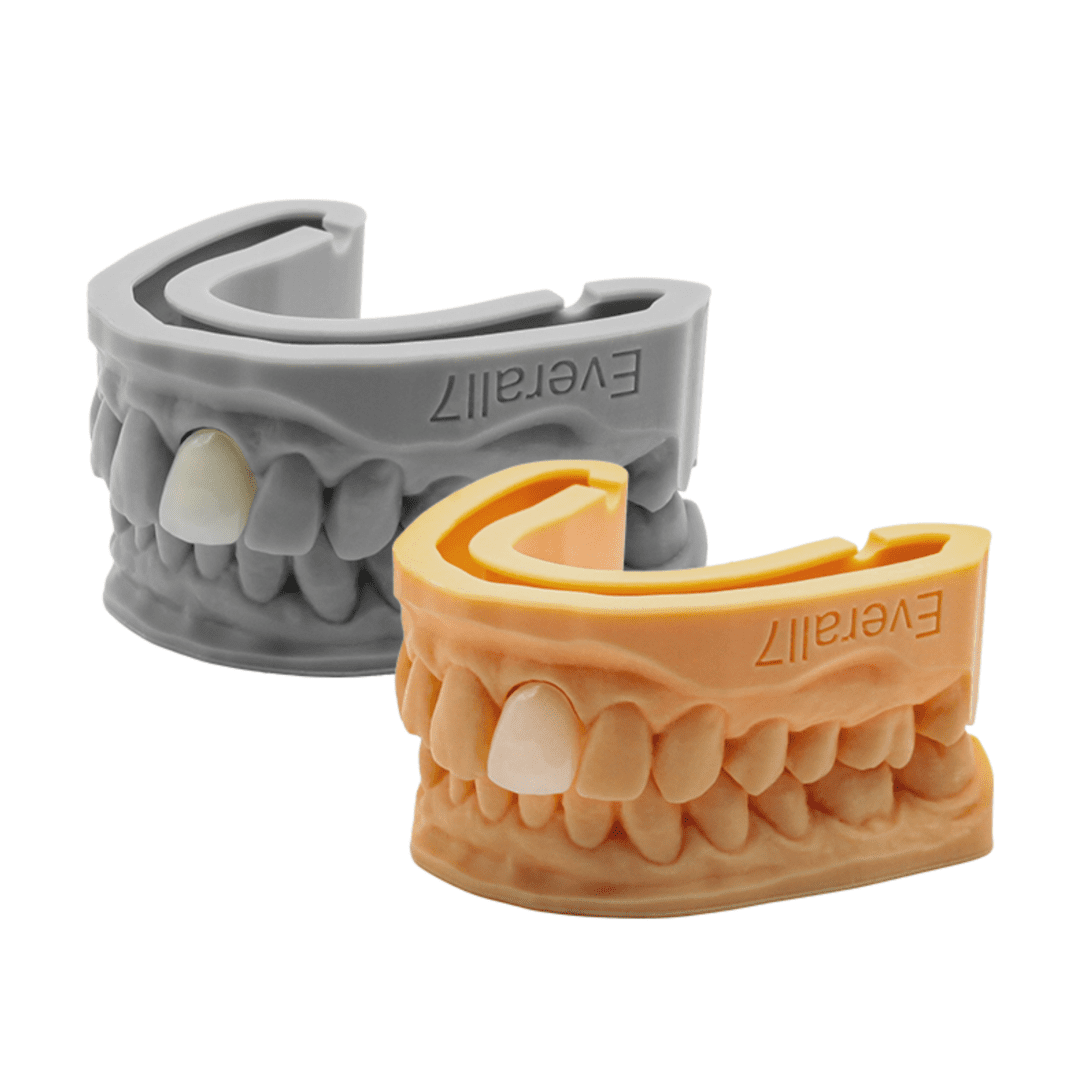
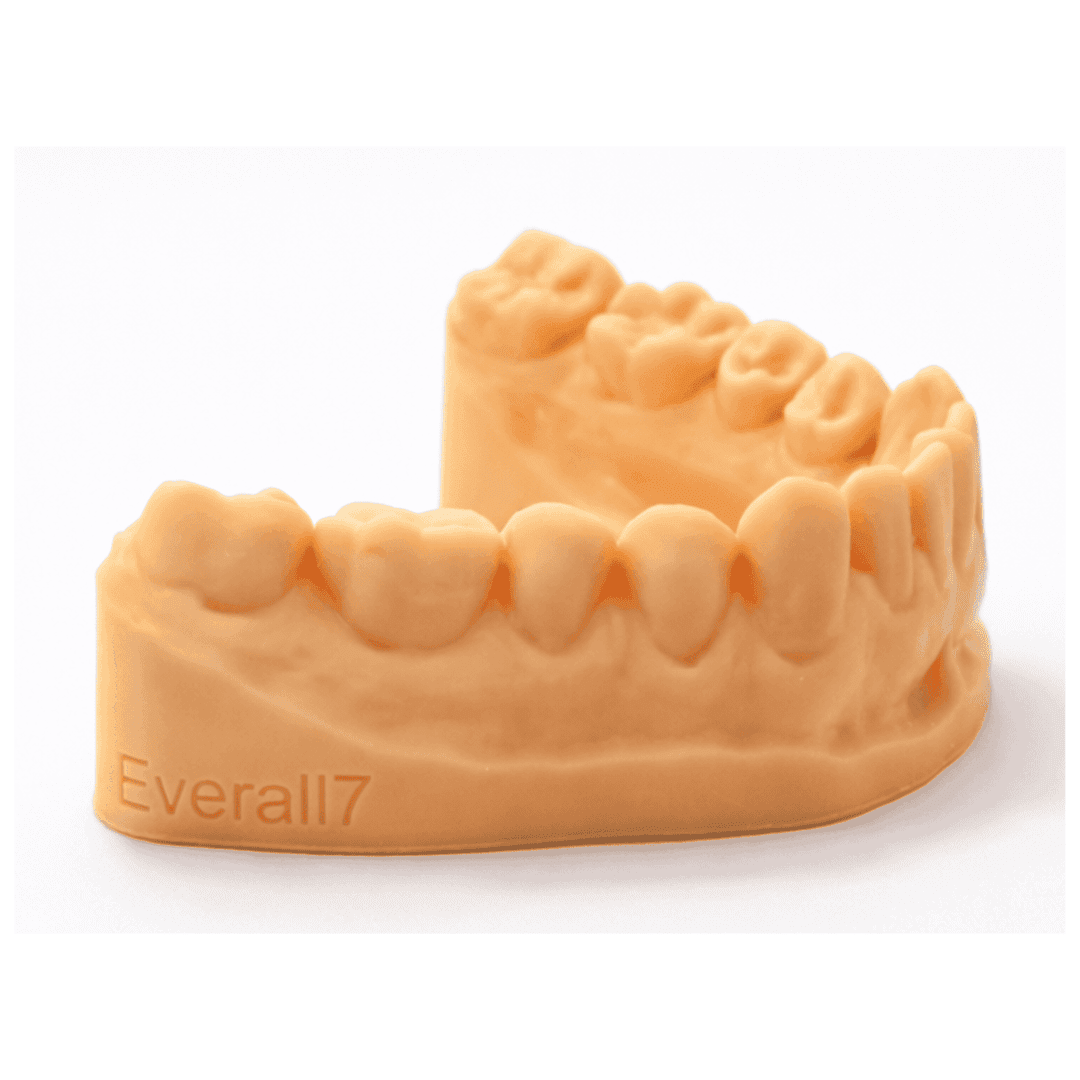
Traditional plaster models are increasingly being replaced by 3D-printed models produced using additive manufacturing technology. They are more durable than plaster models, and a single print can produce several or even a dozen models, depending on the size of the build platform. Moreover, after post-curing in a polymerization unit, the models immediately achieve the required hardness—without the long waiting time typical of plaster.
The only challenge is the so-called oxygen inhibition layer—a thin, under-polymerized surface layer formed as a result of the resin’s contact with oxygen. Thorough removal of this layer during post-processing can be problematic and carries the risk that acrylic applied to a 3D resin model may adhere to its surface during subsequent stages of work.
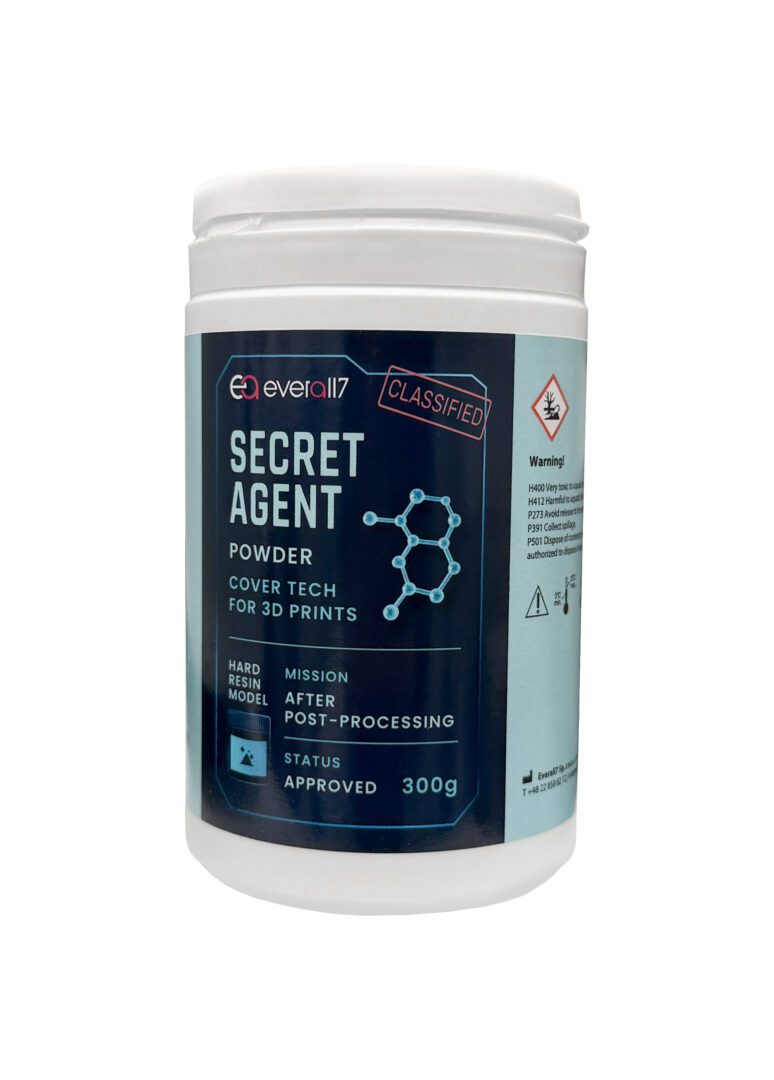
That is why Secret Agent was created – a reliable partner for 3D models!
Secret Agent Powder – Hardens, Protects, Ensures Precision!
Hardening Agent for 3D Resin Models
CHARACTERISTICS
Secret Agent Powder steps in exactly where common problems begin for anyone working with 3D resin prints. When a model turns out to be too soft, prone to damage, or covered with a thin, sticky layer of under-cured resin, this product takes control of the situation. It is also highly effective when thorough post-print cleaning becomes challenging and working with acrylics becomes unpredictable.
This innovative solution was developed in response to real laboratory challenges—issues that previously lacked a single, reliable method of resolution.
When is Secret Agent Powder indispensable?
-
When a 3D resin model is too soft or prone to damage
-
When a thin layer of under-cured resin remains on the surface
-
When thorough cleaning of the model after printing is difficult
-
When problems occur in separating acrylic from 3D resin
ADVANTAGES
-
Eliminates the under-polymerized layer
-
Makes the model surface harder and more scratch-resistant
-
Removes the oxygen inhibition layer, enabling direct and reliable bonding of addition silicones without additional surface treatment
-
Fully prepares the model for further work
-
Easy and fast hardening procedure:
The powder dissolves in warm water (45–55°C), creating an active solution in which the freshly printed and isopropanol-rinsed model is immersed. After just 5–10 minutes, the oxygen inhibition layer is completely removed.
Technical Data
Before Hardening (Liquid State)
Viscosity
150-300 cP
Density:
1,10-1,20 g/cm3
After Hardening (Solid State)
Hardness:
80-85 Shore D
Flexural Strength:
70–100 MPa
Tensile Strength:
35–60 MPa
Colors
beige
grey
Flexural Modulus:
2000–2500 MPa
Tensile Modulus:
550–950 MPa
Elongation at break:
8–12 %
Pliki do pobrania

Product Folder Eco Flow
Reviews
There are no reviews yet.